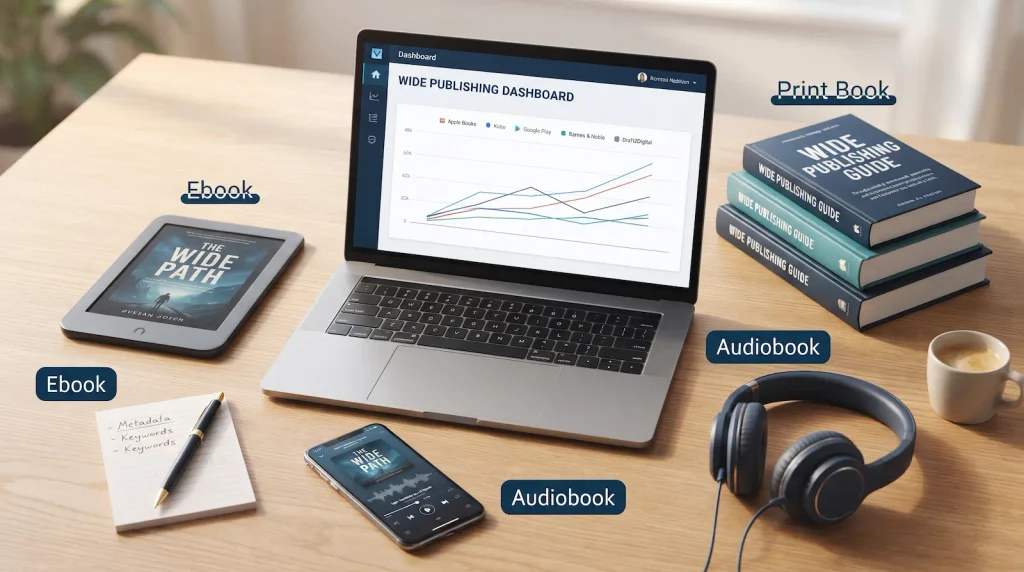
Amazon Kindle Direct Publishing (KDP) is one of the easiest ways to publish a book, but it is not the only option. Authors can use other publishing platforms to reach Apple, Kobo, Google Play, Barnes & Noble, libraries, independent bookstores, subscription readers, and even sell directly from their own websites.
The Top 20 Amazon KDP Alternatives covered in this guide include ebook publishers, print-on-demand services, audiobook distributors, aggregators, and direct-sales platforms. Some are designed for beginners, while others are better suited to established authors with larger catalogs.
Choosing an alternative does not always mean abandoning Amazon. In many cases, the smartest strategy is to use KDP alongside other platforms and distribute your books as widely as possible.
Why Look for Amazon KDP Alternatives?
KDP gives authors access to a huge customer base, but depending entirely on one retailer can create several problems.
For example, your book business can become heavily dependent on Amazon’s:
- Royalty rules
- Pricing requirements
- Content policies
- Search and recommendation algorithms
- Account policies
- Promotional programs
- Customer traffic
This does not mean KDP is a bad choice. In fact, it remains one of the strongest self-publishing platforms available.
However, authors who want more control may benefit from publishing through multiple channels.
Wider Reader Reach
Different readers prefer different stores.
Apple users may purchase through Apple Books. Kobo has a strong international presence. Barnes & Noble remains important in the United States, while Google Play Books gives authors access to Android users.
More Control Over Your Business
Some platforms provide direct sales tools, customer information, subscription options, or storefronts. This can help authors build an audience instead of depending entirely on a marketplace.
Reduced Platform Risk
If most of your income comes from one retailer, a policy or algorithm change can have a major effect on your business.
A diversified publishing strategy spreads that risk across multiple channels.
Top 20 Amazon KDP Alternatives Compared
Before looking at each platform individually, here is a quick overview.
| Platform | Best For | Main Format |
|---|---|---|
| Apple Books for Authors | Apple readers | Ebook, audiobook |
| Kobo Writing Life | International ebook sales | Ebook, audiobook |
| Barnes & Noble Press | US readers | Ebook, print |
| Google Play Books | Android/global audience | Ebook, audiobook |
| Draft2Digital | Easy wide distribution | Ebook, print |
| IngramSpark | Bookstores and libraries | Print, ebook |
| PublishDrive | Global distribution | Ebook, print, audiobook |
| Lulu | Print and direct sales | Print, ebook |
| StreetLib | International publishing | Ebook, print, audiobook |
| BookVault | Premium print books | |
| BookBaby | Publishing services | Ebook, print |
| Smashwords | Ebook distribution | Ebook |
| Reedsy | Professional publishing services | Various |
| Gumroad | Direct sales | Digital books |
| Payhip | Direct-to-reader sales | Digital books |
| BookFunnel | Secure book delivery | Ebook, audiobook |
| Authors Republic | Audiobook distribution | Audiobook |
| Findaway Voices | Wide audiobook distribution | Audiobook |
| Ingram Book distribution | Physical retail reach | |
| Blurb | Photo/art books |
Now let’s examine what makes each option useful.
Top 20 Amazon KDP Alternatives for Ebook Publishing
1. Apple Books for Authors
Apple Books is one of the strongest alternatives to KDP for authors who want to reach readers using iPhones, iPads, and Macs.
Authors can publish directly through Apple’s publishing system and maintain control over book pricing, metadata, territories, and release information.
One important advantage is that Apple Books does not require authors to make their ebook exclusive to Apple.
Best for
- Fiction authors
- Nonfiction writers
- Established authors
- Authors targeting Apple users
- Authors building a wide publishing strategy
Advantages
- Large Apple ecosystem
- Professional reading environment
- Strong international availability
- No Amazon exclusivity requirement
- Direct publishing
Limitation
Apple Books does not provide the same level of reader discovery that Amazon offers, so authors still need their own marketing strategy.
2. Kobo Writing Life
The Kobo Writing Life is one of the most important platforms for authors publishing outside Amazon.
Kobo has a particularly strong presence in Canada and several international markets. It also connects with Kobo’s reading devices and subscription ecosystem.
Authors can upload ebooks, audiobooks, and manage their publishing information from one dashboard.
Why choose Kobo?
Kobo is especially useful if your objective is international reach rather than Amazon-only sales.
It can also be valuable for authors who want their books available through library-related channels.
Best for
Authors targeting:
- Canada
- Europe
- Asia
- International ebook readers
- Subscription readers
3. Barnes & Noble Press
Barnes & Noble Press gives independent authors access to one of the best-known bookselling brands in the United States.
Authors can publish ebooks and print books while managing their own titles, pricing, and metadata.
The platform is particularly useful for writers whose primary audience is American.
Best feature
The biggest benefit is the connection to the Barnes & Noble ecosystem.
For US-focused authors, having your book available outside Amazon can strengthen your retail distribution strategy.
Best for
- US authors
- Fiction writers
- Print book publishers
- Authors targeting Barnes & Noble readers
4. Google Play Books
Google Play Books is another strong Amazon alternative because it places your ebook inside Google’s massive digital ecosystem.
Readers can purchase books through Android devices and other supported platforms.
One interesting advantage is discoverability through Google’s broader ecosystem.
Authors should, however, pay close attention to pricing, territorial availability, metadata, and promotional requirements.
Best for
Authors who want to reach:
- Android users
- International readers
- Google users
- Mobile ebook readers
5. Draft2Digital
Draft2Digital is not simply another ebook store. It is an aggregator.
Instead of uploading your book separately to several retailers, you can use Draft2Digital to distribute your ebook through multiple stores.
Depending on the distribution options available, this can simplify publishing to retailers such as Apple Books, Kobo, Barnes & Noble, and others.
Why authors like Draft2Digital
It can reduce administrative work.
Instead of maintaining several dashboards, you can manage important publishing tasks from one place.
Draft2Digital also offers tools for formatting, universal book links, and other author workflows.
Best for
- Beginners
- Authors with multiple books
- Wide publishers
- Authors who dislike managing multiple retailer dashboards
Important consideration
Aggregators generally take a portion of your earnings in exchange for distribution and convenience.
For Print-on-Demand Books
Ebooks are only one part of self-publishing.
If you sell paperbacks, hardcovers, journals, workbooks, children’s books, or illustrated books, print distribution becomes equally important.
6. IngramSpark
IngramSpark is one of the most important Amazon KDP alternatives for authors interested in bookstore, library, and wholesale distribution.
The platform is connected to Ingram’s large distribution network, making it particularly useful for authors who want their print books available to booksellers and institutions.
You can choose specifications such as:
- Trim size
- Binding
- Paper type
- Interior color
- Cover finish
- Print territories
Why IngramSpark matters
A book intended for independent bookstores may benefit from having access to a traditional wholesale distribution network rather than relying exclusively on Amazon.
Best for
- Print books
- Libraries
- Bookstores
- Professional publishing
- Authors seeking broader retail distribution
7. Lulu
Lulu has been serving independent creators for many years and offers both print-on-demand and direct-sales options.
It is useful for authors who want to produce:
- Books
- Workbooks
- Calendars
- Photo books
- Manuals
- Educational material
One of Lulu’s strengths is its flexibility for creators who want to sell directly instead of relying entirely on traditional marketplaces.
Best for
Authors who want a combination of:
Print-on-demand + direct sales + distribution
8. BookVault
BookVault is particularly interesting for authors who care about premium physical books and direct fulfillment.
It provides print-on-demand services and can be useful for publishers selling directly through their own websites.
Depending on the available specifications, authors can explore different bindings, finishes, paper choices, and specialty products.
Best for
- Premium books
- Direct-to-reader stores
- Special editions
- Independent publishers
- Authors selling through their own websites
9. BookBaby
BookBaby provides a collection of publishing services for independent authors.
Rather than functioning exactly like KDP, BookBaby focuses heavily on helping authors with the production and publishing process.
Services can include:
- Book printing
- Ebook conversion
- Distribution
- Editing
- Cover design
- Publishing assistance
Best for
Authors who want more hands-on publishing support instead of managing every technical step themselves.
Limitation
Additional services can increase your overall publishing costs, so compare the total expense with DIY platforms.
10. Blurb
Blurb is particularly useful for visually driven books.
It is a strong choice for:
- Photography books
- Art books
- Portfolios
- Design books
- Cookbooks
- High-quality illustrated books
An author publishing a text-heavy novel may not gain much from Blurb’s specialized strengths.
However, a photographer or designer creating a premium visual book could find it far more appropriate than a standard KDP workflow.
Global Distribution
11. PublishDrive
PublishDrive is another major publishing aggregator designed for authors who want broad international distribution.
The platform supports multiple publishing formats and offers access to numerous retailers and library channels.
Instead of manually managing every retailer, authors can use PublishDrive as a central distribution point.
Best for
- International authors
- Large catalogs
- Publishers with multiple formats
- Authors targeting less traditional markets
What to watch
Always check the current subscription, distribution, and royalty terms before selecting an aggregator.
Your most profitable option depends on your sales volume.
12. StreetLib
StreetLib focuses heavily on international publishing and distribution.
It can be useful for authors who want to reach readers across multiple countries and languages.
This makes it especially interesting for:
- Multilingual authors
- International publishers
- Regional fiction
- Non-English books
Best advantage
StreetLib can help authors move beyond the largest English-language publishing markets.
13. Smashwords
Smashwords became one of the early names in independent ebook distribution and has historically helped authors distribute ebooks to multiple retailers.
Its integration into the Draft2Digital ecosystem has also changed how authors interact with the service.
For authors researching older wide-publishing workflows, Smashwords remains a relevant name, although today’s authors should evaluate the current Draft2Digital publishing options rather than relying on outdated Smashwords tutorials.
Amazon KDP Alternatives for Audiobooks
Audiobooks represent a separate opportunity because audiobook listeners often use different platforms from ebook readers.
14. Authors Republic
Authors Republic specializes in audiobook distribution.
It can distribute audiobooks to multiple retailers and services, reducing the need to negotiate separately with every audiobook store.
Best for
Authors who:
- Already have professionally produced audiobooks
- Want wide distribution
- Do not want to rely on one audiobook retailer
- Want to reach international listeners
15. Findaway Voices
Findaway Voices became well known for audiobook production and distribution and is now part of Spotify’s audiobook ecosystem.
The platform has been particularly relevant to authors who want wider audiobook distribution rather than depending exclusively on Amazon’s audiobook ecosystem.
Best for
- Audiobook authors
- Narrators and publishers
- Authors seeking wide audio distribution
Because audiobook distribution agreements can change, always review the latest terms before committing rights.
16. Google Play Books Audiobooks
Google also provides an audiobook channel, giving authors another way to reach Android and Google ecosystem users.
This can be useful when your ebook is already available through Google and you want to build a broader catalog.
Best for
Authors with:
- Existing Google Play distribution
- Audiobook catalogs
- Android-focused audiences
17. Direct Book Sales
Marketplace distribution is not the only way to sell books.
One of the most powerful long-term strategies is to create your own sales channel.
18. Payhip
Payhip allows creators to sell digital products directly to customers.
An author can use it to sell:
- EPUB files
- PDF books
- Guides
- Workbooks
- Bonus chapters
- Writing resources
- Audiobooks
The major advantage is control.
You decide how the product is presented, where customers arrive from, and how your store is branded.
Best for
Authors with:
- Email lists
- Social media audiences
- Websites
- Niche communities
- Existing reader relationships
19. Gumroad
Gumroad is another popular direct-sales platform for digital products.
It is not specifically designed for traditional publishing, but authors can use it to sell digital books and related products.
For example, a nonfiction author could sell:
Book + workbook + templates + bonus material
as one package.
This type of product is difficult to replicate through a conventional ebook retailer.
20. BookFunnel
BookFunnel is different from Amazon because its primary purpose is not to act as a bookstore.
Instead, it helps authors deliver digital books securely to readers.
It is especially useful for:
- Reader magnets
- ARCs
- Direct sales
- Ebook delivery
- Author newsletters
- Audiobook delivery
A common strategy is to combine BookFunnel with a storefront such as Payhip.
The storefront handles the transaction while BookFunnel handles delivery.
21. Reedsy(An Extra bonous platform we found while reseaching)
Reedsy is not a direct replacement for KDP in the same way as Kobo or IngramSpark.
Instead, it connects authors with professional publishing specialists such as:
- Editors
- Proofreaders
- Designers
- Book marketers
- Ghostwriters
This makes Reedsy useful during the pre-publication stage.
For an author who wants a professionally edited manuscript and polished cover before uploading to any retailer, professional services can make a significant difference.
Which Amazon KDP Alternative Is Best for You?
There is no single platform that is best for every author.
Your choice should depend on your publishing format, audience, location, budget, and business model.
| Your Goal | Recommended Options |
|---|---|
| Reach Apple readers | Apple Books |
| Reach Kobo readers | Kobo Writing Life |
| Reach US readers | Barnes & Noble Press |
| Reach Android users | Google Play Books |
| Publish everywhere easily | Draft2Digital |
| Reach bookstores | IngramSpark |
| Premium direct printing | BookVault |
| International distribution | PublishDrive / StreetLib |
| Audiobook distribution | Authors Republic / Findaway |
| Direct ebook sales | Payhip / Gumroad |
| Secure ebook delivery | BookFunnel |
| Professional publishing help | Reedsy |
| Photography/art books | Blurb |
How to Choose the Right Amazon KDP Alternative
Before uploading your book, answer five questions.
1. Where Are Your Readers?
Do not choose a platform simply because it advertises a high royalty percentage.
A 90% royalty from a platform that generates almost no sales may be worth less than a lower royalty from a retailer where your readers actually shop.
Start with your audience.
If most of your readers are in the United States, Barnes & Noble may matter more.
If your audience is international, Kobo and other global distributors may be more important.
2. What Format Are You Publishing?
Your platform choice should match your format.
For example:
Ebook: Apple Books, Kobo, Google Play Books
Print: IngramSpark, Lulu, BookVault
Audiobook: Authors Republic, Findaway
Direct digital sales: Payhip, Gumroad
Do not assume that every platform handles every format equally well.
3. Do You Want an Aggregator?
An aggregator saves time by sending your book to multiple retailers.
However, direct publishing can sometimes provide more control.
A simple approach is:
Few books + beginner → direct publishing
Many books + multiple retailers → consider an aggregator
4. Do You Want Direct Customer Relationships?
This is one of the biggest differences between marketplaces and direct sales.
When you sell through your own store, you can build a relationship with your audience through:
- Email marketing
- Reader bonuses
- Memberships
- Special editions
- Bundles
- Preorders
- Exclusive content
That makes direct sales particularly attractive for established authors.
5. What Are the Actual Costs?
Never compare platforms using royalty percentage alone.
Calculate:
Retail price − retailer/platform fee − printing cost − distribution fee = your actual earnings
For print books, printing costs can significantly affect the final amount.
For example, a platform offering a high percentage may still produce less profit if its printing or distribution costs are higher.
Avoid Duplicate Distribution When Going Wide
One of the most important lessons for new self-publishers is to understand distribution overlap.
Suppose you publish an ebook directly to Kobo.
Later, you send the same ebook to Kobo through an aggregator.
You may accidentally create duplicate listings or conflicting metadata.
The same issue can occur with print distribution.
Before using an aggregator, check which retailers it distributes to and remove those retailers from any direct publishing channels you are already using.
Keep a simple spreadsheet containing:
- ISBN
- Book title
- Format
- Retailer
- Distributor
- Price
- Publication date
- Territory
- Royalty
- Login/account
- Distribution status
This small step can prevent major catalog-management problems later.
Wide Publishing vs Amazon KDP Exclusivity
The decision between wide publishing and KDP exclusivity depends on your business model.
KDP Select can provide access to Amazon-specific promotional and subscription-related features, but it comes with exclusivity requirements for enrolled ebooks.
Wide publishing gives you more distribution options, but you become responsible for managing more platforms.
KDP-focused strategy
Best for authors whose readers are overwhelmingly on Amazon.
Wide strategy
Best for authors who want:
- Multiple retailers
- International readers
- Greater platform diversification
- Direct sales
- Long-term audience ownership
Hybrid strategy
Many authors can combine Amazon publishing with selected non-Amazon channels, depending on the rights and exclusivity requirements of the programs they use.
Always check the current terms before enrolling a book in an exclusive program.
How to Build a Better Wide Publishing Strategy
Simply uploading your book to 20 websites will not automatically increase sales.
The better approach is to build a distribution system.
1: Keep Amazon
If Amazon is generating sales, there is usually no reason to remove it simply because you are going wide.
2: Add the Most Relevant Retailers
Start with platforms where your target readers are already active.
You do not need to publish everywhere on day one.
3: Expand Internationally
Use Kobo, Google Play Books, PublishDrive, StreetLib, or other suitable channels when international readership is part of your strategy.
4: Add Print Distribution
If you want bookstores and libraries, investigate IngramSpark and other appropriate print distributors.
5: Build Direct Sales
Once you have an audience, consider Payhip, Gumroad, BookFunnel, or your own ecommerce system.
6: Build Your Email List
Your retailer account is not the same thing as owning an audience.
An email list allows you to communicate with readers when you release:
- New books
- Series installments
- Special editions
- Discounts
- Preorders
- Bonus content
Common Mistakes When Using Amazon KDP Alternatives
Choosing a Platform Only Because of Royalties
A 90% royalty does not matter if the platform generates very few sales for your genre.
Look at the complete economics.
Publishing Everywhere Without a Plan
More retailers can mean more administrative work.
Start with the platforms most relevant to your audience.
Ignoring Metadata
Your title, subtitle, description, categories, keywords, author name, series information, and cover all influence discoverability.
Forgetting Print Costs
For print-on-demand books, calculate your actual profit after manufacturing and distribution costs.
Using Different Book Information Everywhere
Keep your metadata consistent across retailers unless there is a specific reason to change it.
Ignoring Your Own Website
Retailers are excellent for discovery, but your website can become the central home for your author business.
Are Amazon KDP Alternatives Worth It?
Yes, but the answer depends on your publishing goals. If you are publishing your first ebook and have no audience, KDP may still be one of the simplest places to begin. However, as your catalog grows, Top 20 Amazon KDP Alternatives can become increasingly important because they allow you to diversify your distribution.
A successful author business does not necessarily need to use all 20 platforms. Instead, identify the combination that matches your readers and formats.
For example:
Fiction author: Amazon + Kobo + Apple Books + Google Play Books + Draft2Digital
Print-focused author: Amazon + IngramSpark + BookVault
Audiobook author: Amazon ecosystem + Spotify/Findaway + Authors Republic
Direct-sales author: Amazon + Payhip + BookFunnel + email marketing
Photography author: Amazon + Blurb + Lulu + direct sales
Final Thoughts on the Top 20 Amazon KDP Alternatives
Amazon KDP remains a powerful publishing platform, but authors no longer need to build their entire publishing business around one retailer.
The Top 20 Amazon KDP Alternatives covered in this guide offer different advantages. Apple Books and Kobo can expand ebook reach, Google Play Books can connect authors with Android readers, IngramSpark can improve print distribution, and platforms such as Payhip and Gumroad can help authors sell directly.
The key is not to publish everywhere simply for the sake of being everywhere.
Instead, build a deliberate distribution strategy.
Start with the platforms that match your readers. Track your sales and expenses. Avoid duplicate listings. Keep your metadata organized. Then expand when the numbers justify the additional work.
For many authors, the strongest long-term model is not KDP vs. everything else.
It is KDP + carefully selected Amazon KDP alternatives + direct audience building.
That approach gives you more distribution, more flexibility, and potentially a more resilient publishing business.
FAQs About the Top 20 Amazon KDP Alternatives
Yes! As long as your digital book is not enrolled in Amazon’s KDP Select program.
Most major retailers (Apple, Kobo, Google, B&N) offer a standard 70% royalty rate for digital books priced within their sweet-spot sweet pricing tiers (typically $2.99 to $9.99).
Absolutely. While Audible captures a massive share of the audiobook market, millions of listeners consume audio content through streaming services, library apps like OverDrive/Libby, and alternative storefronts like Google Play and Chirp.
Unlike traditional aggregators that take a percentage cut of every single book sold, monthly subscription-based platforms charge a flat recurring fee in exchange for letting you keep 100% of your net royalties. This model is exceptionally cost-effective for mid-to-high-volume publishing catalogs.
The gold standard workflow for indie authors selling direct involves setting up an e-commerce checkout page using Payhip, WooCommerce, or Shopify, and pairing it with BookFunnel or StoryOrigin to securely deliver ebook and audiobook files directly to your customers’ preferred reading devices or apps.
The biggest advantage is diversification. Instead of depending entirely on one retailer, authors can reach readers through multiple stores, countries, formats, and direct-sales channels.
Kobo, Apple Books, Google Play Books, Draft2Digital, PublishDrive, and StreetLib can all be useful for international distribution. The best option depends on the countries and languages you want to target.